


 Visit Us Today


Vehicle Maintenance Checklist: The Complete Monthly-To-Yearly Guide
Your car does a lot for you. It gets you to work on time. It handles road trips, grocery runs, late-night drives, and everything in between. But most of us only think about maintenance when something goes wrong. A warning light pops on. The brakes start making noise. The AC suddenly feels weak in July.
A simple vehicle maintenance checklist can prevent most of those surprises. Small monthly habits and smart yearly checkups keep your car running smoothly and help it look newer for longer.
At Sun Stoppers, we spend every day working on vehicles. For more than 20 years, we have helped drivers protect their interiors with professional window tint that reduces heat and blocks harmful UV rays.
This guide walks you through a comprehensive checklist for maintaining your car and preventative upgrades that reduce wear before it starts. If you want your vehicle to stay reliable, comfortable, and sharp-looking, this checklist will help you build a routine that actually works. Let’s get started!
Key Takeaways
- Use this checklist as a monthly and yearly routine
- Most monthly checks take 10-20 minutes and help catch issues early.
- If something looks or feels off, don’t wait; small problems can become expensive fast.
- Preventative protection (tint, ceramic coating, PPF) can reduce wear and keep your vehicle looking newer longer.
Monthly Vehicle Maintenance Checklist
It’s a good idea to check over the basic functions of your car every month or so. Here’s a maintenance checklist you should perform monthly:
1. Check Your Tire Pressure and Condition
Use a simple tire pressure gauge. And then, compare the reading to the number listed inside your driver-side door frame.
While you are there, look at the tread and sidewalls. Uneven wear, bulges, nicks, or cracks are warning signs. If something looks questionable, have a professional take a look. Tires are not something to gamble with.
2. Check the Oil Level and Change The Oil if Necessary
Even if you are not due for an oil change, check the oil level monthly. Low oil can quietly damage your engine.
Typically, you should change your oil every 5,000 to 7,500 miles or every six months. But that may vary depending on what type of oil you use and how often you drive in harsh conditions.
3. Rotate Tires When Needed
You don’t need to rotate your tires every month. But a good rule of thumb is to rotate them every time you take your car in for an oil change. Rotating helps tires wear evenly and extends their lifespan.
4. Check all Fluid Levels
Pop the hood and check the coolant, brake fluid, transmission fluid, and power steering fluid if your vehicle has them. Washer fluid is often overlooked, but you will notice it immediately when it runs out.
Fluids should sit between the minimum and maximum marks. If a level drops suddenly, that may indicate a leak worth investigating.
5. Inspect Belts and Hoses
Familiarize yourself with the serpentine belt, timing belt, radiator hoses, heater hoses, power steering hoses, and fuel hoses. If you are unsure what you are looking at, that is completely normal. A quick inspection during routine service is always a smart move.
6. Clean Battery Terminals
A weak start in the morning is often not the battery itself. It is corrosion building up around the terminals. Cleaning the terminals helps your battery last longer.
7. Check all Lights
Lights are easy to forget because you do not see most of them while driving. Take a few minutes to turn on your headlights, brake lights, turn signals, and interior lights. Ask someone to press the brake pedal while you check the rear lights or back up near a wall to see reflections.
8. Clean Your Windshield and Other Windows
Dirt, streaks, and haze may not seem like a big deal until you are driving into the sun or caught in heavy rain at night. Cleaning your windshield and windows inside and out improves both safety and appearance.
Use a quality glass cleaner and a microfiber towel to avoid streaks. It only takes a few minutes and makes every drive easier on your eyes.
9. Wash Your Car
You do not have to wash your vehicle obsessively, but letting dirt sit for too long is not ideal either. Road grime, bird droppings, tree sap, and winter salt slowly wear down your paint. Even if your car looks fine from a distance, contaminants build up over time.
If you live in an area where roads are salted during winter, rinse the underside of your vehicle regularly. That simple step helps reduce rust and long-term corrosion.
10. Check Your Paint and Apply Wax If Necessary.
Many experts recommend waxing every 3–6 months, depending on the conditions. If your car has a ceramic coating, you may not need wax.
Want to protect your interior and keep your car looking newer longer?
Professional window tint helps reduce UV exposure, heat buildup, and interior fading while giving your vehicle a cleaner look.
Yearly Maintenance Checklist
Many maintenance tasks only need to be done yearly (or based on mileage), although you may need to perform them more often if you frequently drive in rough conditions.
Some tasks are DIY-friendly, but many are best handled by a trusted mechanic, especially if you don’t have experience working on vehicles. That’s why an annual checkup is a smart move even if nothing feels “wrong.”
Here’s your yearly maintenance checklist:
1. Replace the Engine Air Filter
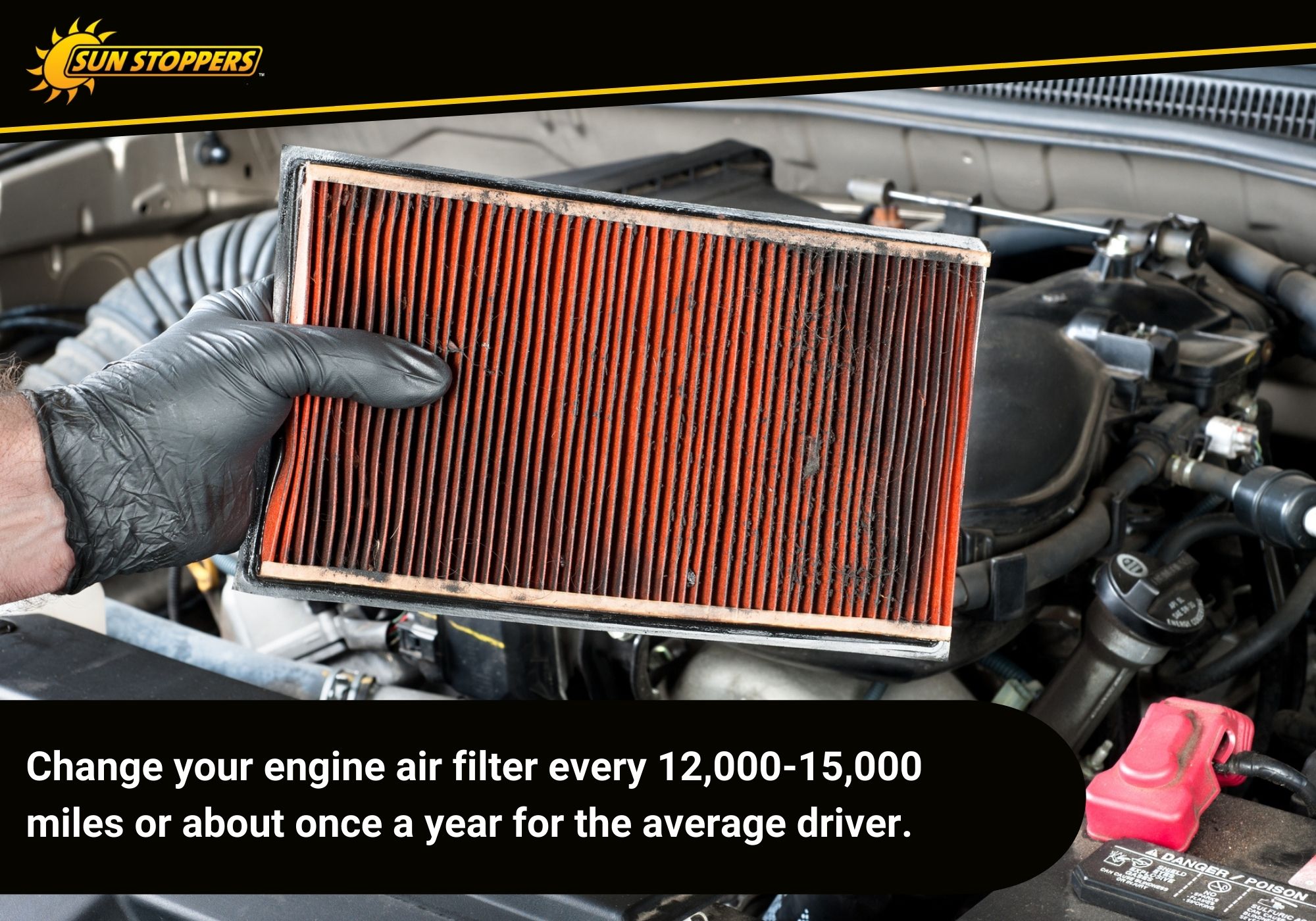
Dust, dirt, and contaminants can damage your engine, so a clean engine air filter is essential. Replace it every 12,000 to 15,000 miles (about once a year for many drivers).
2. Check Your Cabin Air Filter
Your cabin air filter is what keeps dust, pollen, and road grime from blowing straight into your vents. Over time, it gets clogged, especially if you drive in heavy traffic or dusty areas. A dirty filter can reduce airflow and make your AC work harder.
Many filters last between 15,000 and 25,000 miles, but it is smart to check them once a year. If it looks dark or packed with debris, replace it. If you are not sure where it is located, your owner’s manual will point you in the right direction.
3. Replace Windshield Wiper Blades
Wipers are easy to ignore until you actually need them. If they leave streaks, make noise, skip across the glass, or fail to clear water evenly, it is time for a new set. Most drivers replace them once a year, but extreme heat or cold can wear them out faster.
4. Have Brake Pads and Rotors Checked
Brakes may not need to be replaced every year, but they should absolutely be inspected yearly. If you hear squealing or grinding, feel vibration when braking, or notice it takes longer to stop, schedule an inspection sooner rather than later.
5. Inspect Suspension and Steering Components
Clunking sounds, pulling to one side, excessive bouncing, or steering that feels loose are signs that something may need attention. Suspension and steering components wear gradually, so changes can be subtle at first.
6. Check the Exhaust System
Rust, small holes, or leaks can develop over time, especially in areas with snow and road salt. If you hear an unusual noise or smell fumes, do not ignore it. Exhaust issues can affect both performance and safety. A quick check during routine service is usually enough to spot problems early.
7. Test the Battery and Charging System
Few things are more frustrating than turning the key and hearing nothing.
A simple battery test can reveal whether it is nearing the end of its life. This is especially important before winter or long road trips. Extreme temperatures can push a weak battery over the edge. Testing it ahead of time costs far less than getting stranded.
8. Detail the Interior Once a Year
A thorough interior detail once a year keeps upholstery, dashboards, and trim in better condition. It helps preserve materials and protect resale value. When your interior feels clean and cared for, the entire driving experience improves.
Top Preventative Maintenance Tips to Consider
Most of the tasks above focus on checking parts and replacing them when they wear out. Preventative maintenance reduces stress on your vehicle before damage happens, so your interior and exterior stay in better shape over the long run. It’s also one of the easiest ways to make day-to-day ownership simpler: fewer “surprises,” easier cleaning, and better resale value.
Here are three upgrades that can help preserve your car longer and reduce upkeep over time:
1. Add Window Tint
Over time, UV rays can fade dashboards, dry out leather and vinyl, and make plastics brittle. Quality window tint helps block UV exposure and reduce heat buildup, which makes the car more comfortable and helps protect interior materials from premature aging. If you’re thinking about making this kind of long-term upgrade, our window tint service is designed to improve comfort while keeping a clean, factory-finished look.
2. Add a Ceramic Coating
Even if you wash regularly, your paint takes a beating from sun, rain, road grime, bug splatter, and everyday contaminants. Ceramic coating creates an additional protective layer that helps preserve gloss and makes routine cleaning easier, so your vehicle stays looking “freshly detailed” longer. If you’re deciding whether ceramic coating is worth it compared to waxing, durability, maintenance, and real-world benefits, our guide to understanding ceramic coating benefits walks through what it does and what you can realistically expect.
3. Add Paint Protection Film
For drivers who rack up highway miles (or just want peace of mind in parking lots and on rough roads), paint protection film helps reduce the impact of rock chips, sand, and small abrasions, especially on high-impact zones like the front bumper, hood, and mirrors. It’s one of the most effective ways to protect the areas that typically show wear first.
FAQ’s
1. How often should I check tire pressure?
Checking tire pressure monthly is a smart baseline, and you should also check it before road trips or big temperature swings.
2. How often should I change my oil?
Many drivers fall between 5,000 and 7,500 miles, but your exact interval depends on your vehicle, oil type, and driving conditions, following your owner’s manual.
3. How often should I rotate tires?
A common rule is rotating with every oil change, but follow your manufacturer’s recommendation for the best results.
4. What fluids should I check monthly?
Check coolant, brake fluid, power steering fluid (if applicable), transmission fluid (if applicable), and windshield washer fluid.
5. What maintenance should I do before a road trip?
Check tire pressure/tread, oil level, fluid levels, lights, wipers, and brakes, then address anything that seems off before you leave.
6. What preventative upgrades help keep my car looking new?
Window tint protects interiors from UV, ceramic coating protects paint and gloss, and paint protection film helps reduce chips and scratches.
Conclusion
At Sun Stoppers, we appreciate the beauty of a well-maintained car. That’s why we offer a variety of preventative maintenance services. Whether you’re looking for ceramic coating, paint protection film, or automotive window tint, we have you covered.
Our knowledgeable staff will expertly apply the products, creating a beautiful finish that lasts for years. Use our store locator to find a location near you, or click here to get a free quote today.
Installed by certified pros • Premium films • Long-lasting protection
Get Tint You Can Trust
Over 20 years of experience protecting vehicles with professional window tint, ceramic coating, and paint protection film.