




 Automotive
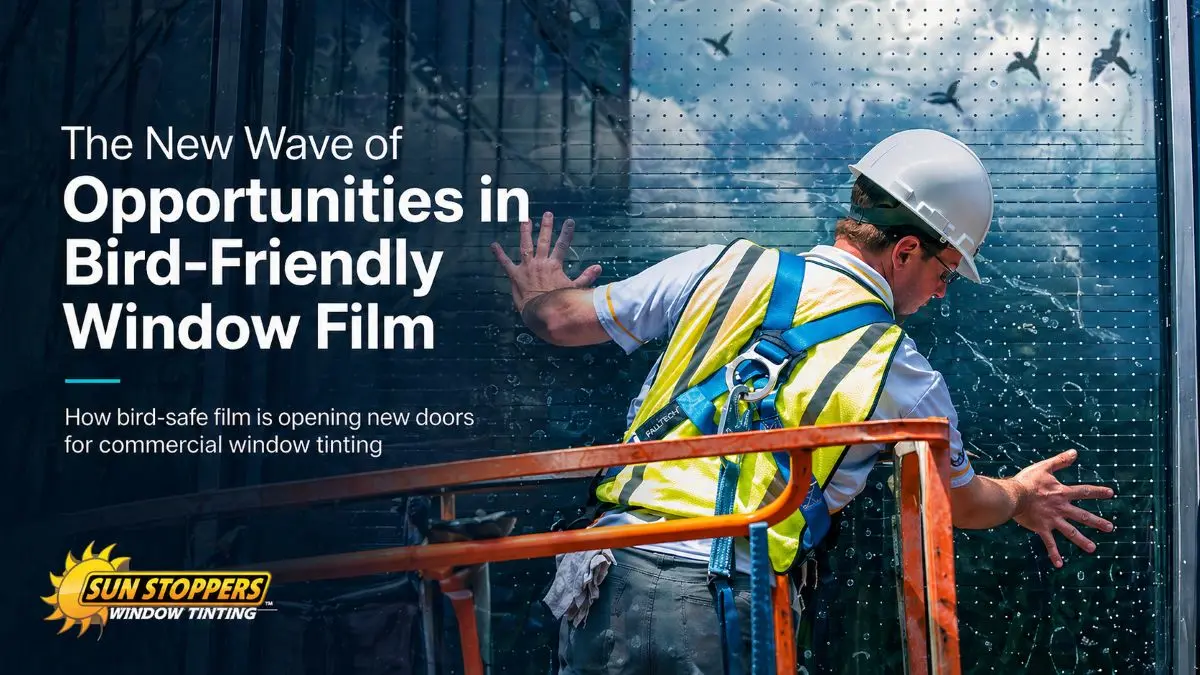
If you’ve ever walked past a large glass building early in the morning, you may have seen something most people just step over and forget about.
Birds on the ground that never saw the glass coming.
It happens every single day — and most people in our industry have no idea how big the problem actually is. In the United States alone, estimates put bird deaths from window collisions at close to a billion per year. A billion. And the culprit is the same material we work with every day.
Glass.
For years this stayed off the radar. It wasn’t a dinner table conversation. It wasn’t making headlines. But that’s quietly been changing, and if you pay attention to where the building industry is headed, there’s a real opportunity sitting right in front of us.
“The companies that move now will benefit the most. This is still a window most of our competitors haven’t even noticed yet.”
Why Glass Is the Problem — and Why Now
Modern architecture loves glass. Big windows, clean lines, open sightlines — it’s everywhere, and it’s not going away. From a design standpoint, it looks sharp. From a bird’s perspective, it either looks like open sky or trees and greenery. They don’t register it as a barrier. They fly straight into it.
Bird-friendly window film fixes that with an elegant solution. It adds a pattern to the glass — dots, lines, frosted elements — that birds can detect and avoid, while barely registering to the human eye once it’s installed. The glass doesn’t disappear. It just stops being invisible to wildlife.
This isn’t a theory. Buildings across the country, including the Javits Convention Center in New York and McCormick Place in Chicago have seen dramatic drops in bird strikes after installing bird-friendly treatments. The results are hard to argue with.
From Good Idea to Actual Requirement
Here’s where the business angle starts to get interesting.
New York City, Toronto, San Francisco and numerous other municipalities have already pushed through bird-safe building standards. LEED certification programs are adding credits for bird protection measures. And as more cities watch each other’s lead, the regulatory tide is moving in one direction.
This is no longer just a feel-good upgrade a building owner might consider. It’s becoming something architects are designing around, something developers are asking about, and something property managers are starting to budget for — especially on existing buildings that need to retrofit before requirements catch up to them.
The Appearance Objection (And Why It Doesn’t Hold Up Anymore)
The first thing most people say is some version of: “That’s going to ruin how the building looks.”
It’s an understandable concern, since the film needs to change the appearance of the glass to work. The products available today are clean and subtle — birds’ eyes work differently from humans’ and the patterns that deter them barely register to us. In a lot of cases they actually add something to the look of the glass rather than taking away from it. This isn’t the frosted privacy film people picture in their heads. It’s a different category entirely.
Once you show a property owner what current products actually look like installed, that objection usually disappears.
What This Means for Your Business
From a purely practical standpoint, bird-friendly film gives you a reason to be in front of a completely different type of customer — large commercial property owners, building managers, sustainability-focused developers, architects who need LEED points built into their specs.
You’re not just offering tint. You’re offering a solution that reduces liability, supports environmental goals, and keeps the building ahead of where regulations are heading. That’s a different conversation than most window film companies are having, and it positions you differently in the market.
The Window Is Still Open — But Not Forever
The companies that figure this out early are going to have a real advantage, because most of the competition isn’t paying attention yet.
That means learning the product category, training your team, and starting to work it into your commercial conversations now — before it becomes the thing everyone is scrambling to catch up on.
Glass isn’t going anywhere. But what we do with that glass is absolutely changing.
Get ahead of it.
 Back to Latest News