

 Automotive
$150–$300
Typical basic dyed-film range for a full vehicle, excluding windshield.
Window tinting is one of the most popular vehicle upgrades and one of the most misunderstood. This guide covers cost, ceramic vs. regular tint, legal darkness, heat rejection, curing, warranties, and Tesla tinting so you can make a better decision before you buy.
For most drivers who care about heat, comfort, UV protection, privacy, or appearance, professional car window tinting can be worth it. The biggest difference comes from choosing the right film. Ceramic and nano-ceramic films generally deliver much stronger heat rejection and long-term clarity than basic dyed film without needing to be extremely dark.
Vehicle size, film type, glass complexity, and the number of windows all affect the final price.
Typical basic dyed-film range for a full vehicle, excluding windshield.
Typical ceramic or nano-ceramic full-vehicle range.
Larger SUVs, trucks, or Teslas with panoramic glass can cost more.
Cost depends on the vehicle size, the film you choose, and the number of windows. Typical ranges for a full vehicle, excluding the windshield:
Premium films cost more upfront but deliver better heat rejection, clarity, and longevity. Every job starts with a written quote based on your exact vehicle before work begins.
For most owners who keep their vehicle more than a couple of years or live in a hot climate, yes. Ceramic rejects far more infrared heat than dyed or basic carbon film, stays clearer longer, resists fading, and comes with stronger warranties. The higher initial cost is usually offset by improved comfort, reduced air-conditioning load, and longer film life.
Darkness controls how much visible light passes through. Film construction determines heat rejection, clarity, color stability, and longevity.
The best film depends on what you care about most:
In hot climates, ceramic film is the smartest choice for many drivers because it rejects more infrared heat without needing to be extremely dark, stays optically clear, and does not interfere with electronics.
Ceramic films use non-conductive ceramic particles that target infrared heat. Regular dyed films mainly darken the glass and offer limited heat control. Metalized films can interfere with signals and are generally avoided on many modern vehicles.
Metalized films can interfere with radio, GPS, cellular, and keyless systems. Ceramic, carbon, and dyed films do not. Modern ceramic films are a preferred choice for vehicles with advanced electronics, cameras, and sensors.
| Film Type | Heat Rejection | Color Stability | Signal Interference | Typical Lifespan | Price |
|---|---|---|---|---|---|
| Dyed | Low | Can fade | None | 3–5 years | Lowest |
| Carbon | Good | Excellent | None | 8–12+ years | Mid |
| Ceramic / Nano-ceramic | Excellent | Excellent | None | 10–15+ years or lifetime | Highest |
Tint laws are measured in Visible Light Transmission, or VLT. Lower percentages mean darker glass. Requirements vary by state and vehicle type.
The supplied guide summarizes front-side-window limits for North Carolina, Texas, and Arizona and notes that rear-window rules vary by state and vehicle type. Medical exemptions are also discussed through the appropriate DMV process.
35%Front side minimum VLT
25%Front side minimum VLT
33%Front side minimum VLT
Limited tinting is allowed in the supplied guide. It notes that NC, TX, and AZ permit a non-reflective strip across the top of the windshield, usually above the AS-1 line or top few inches. Clear or very high-VLT ceramic films may also be used for heat reduction where legal.
Infrared rejection and total solar energy rejection tell you more about heat performance than shade alone.
Yes. Quality film blocks infrared radiation, one of the major sources of heat entering through glass. Even relatively light ceramic films can reject a large percentage of total solar energy. Film technology matters more than darkness alone.
Yes. A high-quality light or medium ceramic film can reject more heat than a dark dyed film. VLT controls how much visible light passes through, while infrared rejection controls much of the heat you feel.
These are common performance measurements. UV describes ultraviolet rejection, IR describes infrared rejection, and TSER measures total solar energy rejected.
The percentage of ultraviolet light blocked. Quality films commonly block 99% or more.
The percentage of infrared radiation rejected, an important indicator of felt heat reduction.
The overall portion of solar energy the film keeps out of the cabin.
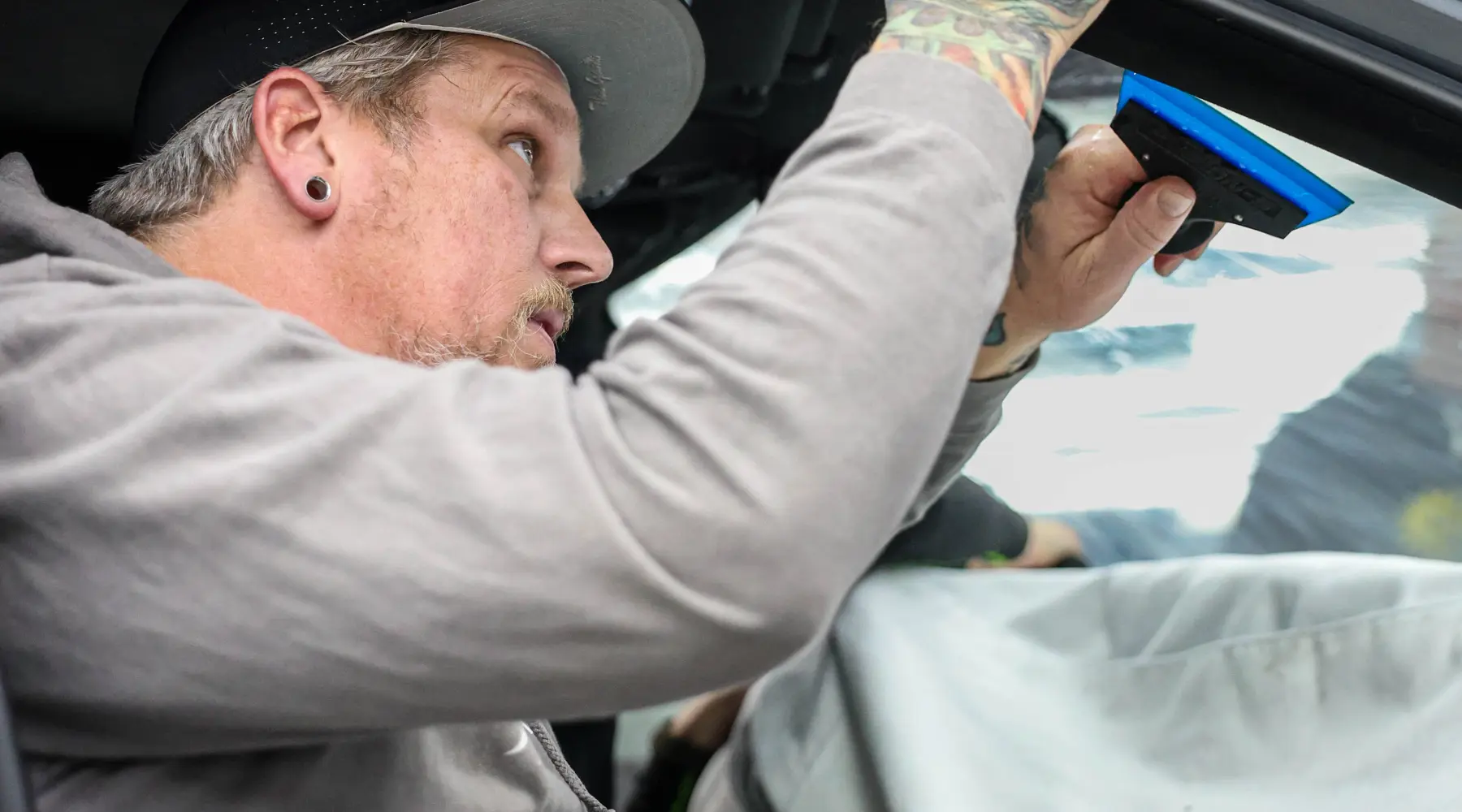
Installation quality, cure time, aftercare, and removal technique all affect how the finished tint looks and lasts.
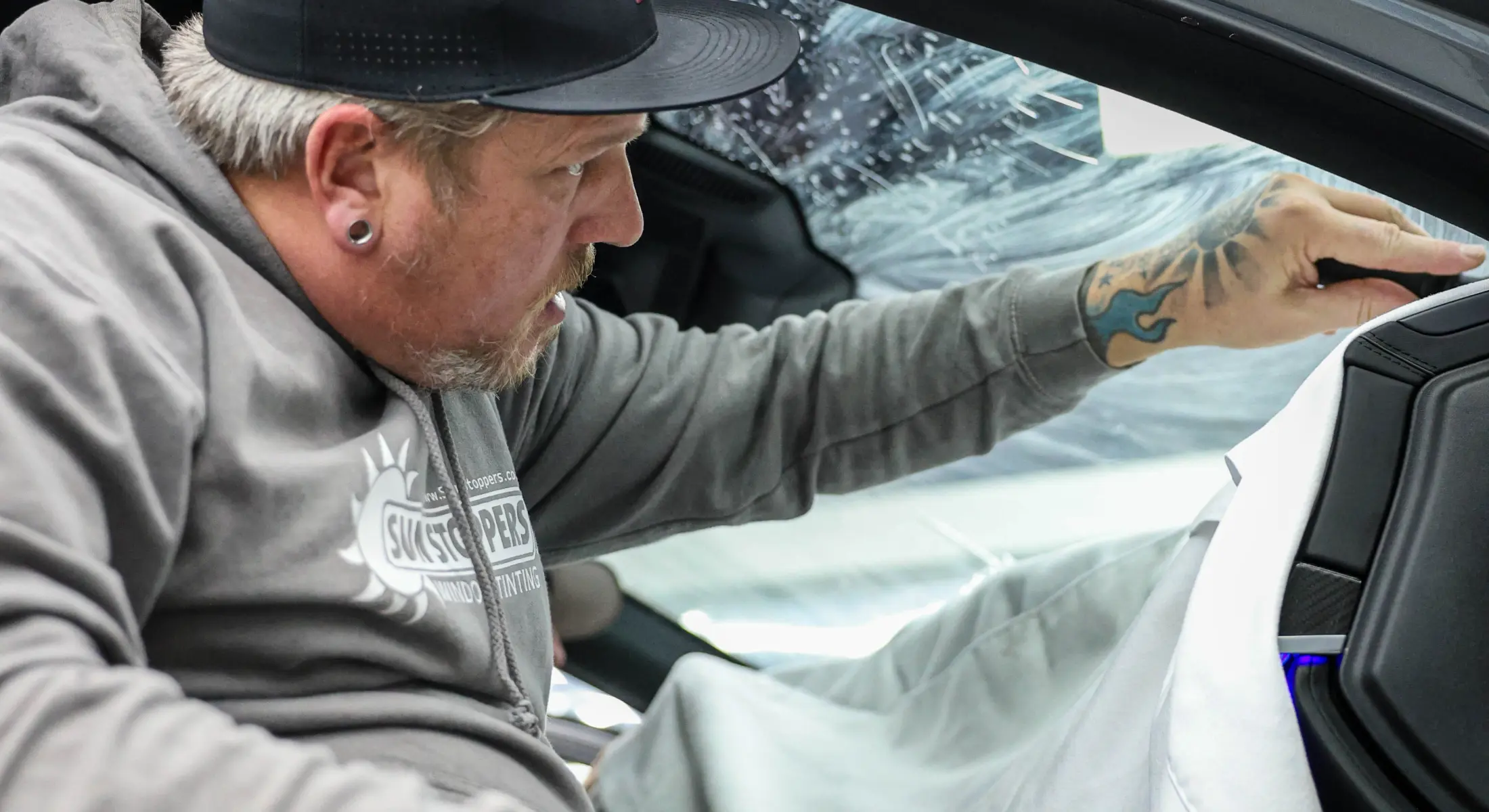
Most passenger cars take 2–4 hours. Larger SUVs, trucks, or vehicles with complex or panoramic glass can take 4–6 hours or more. Same-day service is common when the schedule allows.
Usually 3–7 days. The film needs time for installation moisture to evaporate and the adhesive to fully cure. Rolling windows down too early can cause shifting or wrinkles.
Small water bubbles and temporary haze can be normal during curing and typically disappear as moisture evaporates. Large bubbles, dirt, or wrinkles that do not resolve are installation issues.
Quality ceramic or carbon film installed correctly typically lasts 10–15 years or the life of the vehicle. Cheap dyed film often begins fading or changing color sooner.
Professional films commonly include manufacturer warranties covering issues such as fading, bubbling, peeling, and color change when installed by an authorized dealer.
Yes. Professional removal clears old film and adhesive so the new film can bond properly. DIY removal can leave residue or risk damage to rear defroster lines.
Proper professional installation does not damage the defroster grid. Damage is more likely from poor technique or aggressive removal of old film.
Large glass areas, advanced electronics, and heat load make film selection especially important on Teslas and other EVs.
Ceramic or nano-ceramic film is strongly recommended in the supplied guide. Non-metallic ceramic film provides high heat rejection with no signal interference and strong optical clarity.
For many owners, yes. The large panoramic roof can be a major heat source. A high-performance ceramic film in a lighter VLT can reduce heat and UV while preserving the open look of the cabin.
Sun Stoppers can walk you through film options, legal shades, heat performance, and exact pricing for your vehicle.
Tint-law information above reflects the supplied educational content and is not a substitute for checking current state requirements before installation.