






 Automotive
Bubbling
Pockets and air bubbles across the glass, usually the rear window first.
See why automotive tint bubbles, turns purple and gets harder to remove with age, and why professional removal protects your glass, your defroster and your visibility.
Pockets and air bubbles across the glass, usually the rear window first.
Black film fading toward purple, blue or an uneven bronze tone.
Corners lifting, film tearing into strips, or a cloudy, brittle look.
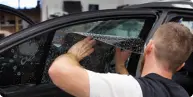
Old window tint does not always peel off in one clean sheet. Sometimes it releases easily. Other times the polyester separates from the adhesive and leaves years of hardened glue baked onto the glass, and on severely deteriorated rear windows the job can run for hours while aging defroster lines sit at risk.
Sun Stoppers professionally removes failed automotive window film, cleans the remaining adhesive and prepares your glass for a modern replacement film. We explain the likely process and the honest risks before any work begins, so there are no surprises once the film starts coming off.
Automotive window film is a laminated product built from extremely thin layers: polyester, colorants, UV absorbers, heat-rejecting materials, pressure-sensitive adhesive and a scratch-resistant coating. Sunlight, ultraviolet radiation, elevated temperatures, humidity and repeated heating-and-cooling cycles place stress on every one of those layers, and the film can fade, discolor, bubble, peel, crack or separate from its adhesive.
The speed of that breakdown depends on several factors working together:
Window-film manufacturers specifically warranty premium products against bubbling, peeling, cracking, demetallization, discoloration and fading, because those are recognized forms of film failure. XPEL, for example, provides automotive film warranty coverage that includes bubbling, peeling and discoloration when the applicable conditions are met.
Five layers, bonded together and bonded to your glass. Each one breaks down differently, and each failure mode below is tied back to the layer that’s failing.
The bubbles you see are commonly a sign that the film-and-adhesive system is no longer bonded uniformly to the glass. During installation, the adhesive forms an even bond across the entire window. As the film ages, that adhesive can lose cohesive strength, separate from the polyester, release from the glass or hold on only in irregular areas, and those separated spots create the pockets you see as bubbles.
Heat accelerates the aging by warming the glass, film and adhesive, then letting them contract again as the car cools, and that cycle repeats over and over throughout the life of the vehicle. Contamination plays a part too: the International Window Film Association notes that film applied over stickers or decals can form a poorer bond than film applied directly to glass, which may cause failure or bubbling around that area.
Once old tint starts bubbling, it cannot be permanently repaired.
Pressing the bubbles down, puncturing them or reheating the film does not restore a deteriorated adhesive system. The failed film has to be removed, the glass cleaned and new film installed.
Traditional dyed window film uses colorants to absorb portions of visible light and create its dark appearance. Sunlight carries ultraviolet energy that can break the chemical bonds in those dyes and polymers, and across years of exposure less stable colorants lose parts of their original color. When some dye components fade faster than others, the film shifts toward purple, blue, bronze or an uneven cast.
Lower-cost films often carry dye closer to the surface, where it sits more exposed to the environment. LLumar explains that its color-stable dyes are integrated into the film, while some lesser-quality products rely on surface-applied dye that discolors more easily.
Modern manufacturers have engineered more stable systems in response. 3M, for instance, describes nano-carbon polyester, patented infused dye technology and ceramic nanoparticle systems built to improve color stability, fade resistance and durability compared with conventional dyed films.
Most automotive tint is built on thin polyester film. Polyester is strong, clear and dimensionally stable, but no polymer is immune to unlimited environmental exposure. UV radiation and heat gradually alter the polymers, coatings, dyes and adhesive layers, and film that was once flexible can turn brittle, hazy or difficult to remove in one piece. That is why one old film peels off cleanly while another film of similar age tears into narrow strips or tiny fragments. The original product, the installation, vehicle storage and climate all shape the outcome.
Film in a garage-kept vehicle in a moderate climate ages differently from film on a car parked outdoors every day in Arizona, Nevada, Texas or Florida. Hot-climate vehicles regularly face:
Climate is not the only factor, but it can dramatically affect how quickly marginal film, weak adhesive or an improper installation starts to fail. The angle of exposure matters too, since rear glass and sloped hatchback windows can receive prolonged sunlight while also carrying defroster grids that complicate removal.
Comparing older film technology with today’s premium products is a little like comparing an early smartphone with a current model. Both perform the basic function, but the materials and engineering have changed dramatically. Modern premium films may combine:
Ceramic film does not need to be extremely dark to reject meaningful heat. Nano-ceramic materials target infrared energy while maintaining visible-light transmission and avoiding the signal-interference concerns tied to some metallized films. XPEL’s published specifications list separate measurements for visible-light transmission, ultraviolet rejection, total solar-energy rejection and infrared-energy rejection, which points to an important truth about performance.
Darker does not automatically mean better.
A premium, lighter ceramic film may reject more solar energy than an inexpensive, much darker dyed film.
Customers often picture removal as grabbing a corner and peeling the film away, and sometimes it works exactly like that. Other times the film separates into layers: the polyester lifts off and the adhesive stays behind, sticky, gummy, hardened or uneven, and every bit of it has to be softened and cleared without harming the vehicle. This is why an initial estimate is sometimes a range rather than a guaranteed final price. No single method works on every vehicle, so the technician chooses a process based on the glass, the film condition, the adhesive and the defroster system underneath.
The technician checks bubbling, discoloration, layer separation and defroster condition before touching anything, and sets the plan around what the film is doing.
Controlled heat or a professional steamer loosens the adhesive bond so the polyester lifts with less tearing, especially on rear glass.
Madico’s professional guidance recommends peeling slowly with consistent pressure, which leaves less adhesive behind on the glass.
Any residue is soaked, softened with a non-caustic adhesive remover and worked off without scratching the glass or the defroster grid.
Technicians check for remaining residue, scratches, antenna lines and defroster damage before anything new goes on.
Modern ceramic film goes on properly prepared glass, bonding directly instead of over old adhesive.
Swap in your own removal-sequence photography alongside each step for the live build.
Softens the adhesive and makes the film flexible. Too little leaves it stubborn, too much risks the glass, trim and electronics, so the goal is even, controlled warming.
Drives heat and moisture behind the film to loosen the adhesive for a gradual peel, especially useful on rear glass to reduce aggressive scraping.
A decades-old solar-heating technique: dark plastic against the film in the sun warms the film and adhesive more evenly before peeling begins.
Softening solutions, steam, non-scratch pads and carefully chosen tools clear whatever residue is left, with extra care around rear windows.
The process can also produce a strong odor. Aged adhesive, heat, steam and removal chemicals can create an unpleasant smell that varies with the original film, the adhesive chemistry and the products used during removal.
Rear defroster lines are thin conductive elements attached to or printed onto the inside surface of the rear glass, and the tint adhesive is bonded directly over them. When old film comes off, the technician is not working on ordinary bare glass; the film and adhesive have to separate from the very surface that carries the electrical grid.
New film can normally be installed over an intact defroster system. Madico states that compatible automotive film can be applied over rear-window defrosters without damaging them. Removal is a different matter, because aged film and adhesive may have stayed bonded to those lines for many years. Possible removal risks include:
A reputable shop should never promise that every old defroster will survive removal. Careful procedures reduce the risk, yet the original condition of an old grid is not always visible before the film comes off.
In extreme cases, replacing the entire rear glass is more practical than attempting a long, risky removal. That possibility deserves a look when:
This does not mean every bubbled rear window needs new glass. It means severely deteriorated film can turn into a glass-and-defroster decision instead of a simple tint job.
Online videos make removal look easy because they usually show film that cooperates. Your car may not. Here is what a DIY attempt can cost you:
Scraping across a rear defroster grid can cut, lift or remove the conductive material.
Razor blades can work on certain glass when used correctly, but coatings, antennas and delicate surfaces scratch permanently under careless use.
Removal chemicals can stain or ruin leather, fabric, plastic, speakers, electronics and rear-deck materials.
Concentrated heat, poor technique or thermal shock can place enough stress on glass to crack it.
When the film peels but the glue stays, residue smears across the glass and contaminates surrounding trim.
Partially removed tint, glue smears and damaged film can make visibility worse, especially at night.
A failed DIY attempt can turn one difficult job into two. Technicians often have to clean up the partially removed film, unknown chemicals and damaged adhesive before the normal removal process even begins, which raises the professional labor.
Window-tint removal should be priced by the condition of the vehicle, not simply the number of windows. The factors that move the labor include:
Removal time cannot always be known until the work begins.
Sun Stoppers inspects the vehicle, walks you through the likely process and provides the clearest estimate possible before we start.
Schedule an inspection when you notice any of these:
Failed film is more than a cosmetic problem. Distorted or hazy film can interfere with safe visibility, which is a good reason not to wait.
Once the old film is off, the glass gets a thorough cleaning and a full inspection. Our technicians check for remaining adhesive, scratches, defroster damage, antenna lines, existing glass damage, contamination around the seals and residue from previous removal chemicals. Then the glass is prepared for new film, which makes this the ideal moment to upgrade to a product with better color stability, clarity, UV protection and heat rejection.
Old dyed film was designed mainly to darken the glass. Modern premium film does far more. Depending on the product you choose, you can gain:
XPEL’s published specifications list 99% UV rejection across its PRIME CS shades, while more advanced product levels are engineered for stronger heat and infrared performance.
Sun Stoppers has worked with automotive window film for decades, and we understand what happens when film ages because we have removed nearly every kind of failure there is:
Our technicians use professional tools, controlled heat, steam and adhesive-removal procedures selected for your specific vehicle. We also explain the risk before the work begins. No scare tactics, no unrealistic promises, just an honest assessment of the film, the glass and the best path forward.
Tell us what your glass is doing and we will inspect the vehicle, explain the likely process and give you the clearest estimate possible before any work starts.
Because the condition, age, origin and installation quality of existing window film are unknown, Sun Stoppers cannot guarantee that every film will release cleanly. Removal of old or deteriorated film may reveal:
When film has been bonded to rear defroster lines for many years, removal carries an unavoidable risk of grid damage. Sun Stoppers uses professional methods to reduce that risk and will discuss any serious concerns with you before proceeding.
This disclaimer also appears on the work authorization.
No. Bubbling is generally a failure within the film-and-adhesive system, and the permanent solution is removal and replacement.
The original dyes degraded or changed after prolonged exposure to sunlight, heat and UV radiation. Less stable dye systems tend to discolor sooner.
It can take less than an hour on cooperative film or several hours on badly deteriorated material. The rear window is often the most time-consuming part.
The polyester and adhesive do not always age at the same rate. The polyester can release while the adhesive stays bonded to the glass.
Heating and softening aged adhesive can release a strong odor, and adhesive removers and cleaning solutions add to it. The exact smell depends on the original adhesive and the removal process.
Yes. There is a risk, particularly on old rear windows with brittle, damaged or heavily bonded film. Professional technique reduces the risk but cannot remove it completely.
That is generally not recommended, since the new installation would depend on the condition and adhesion of the failing film underneath it. Old film should be removed so the replacement bonds directly to properly prepared glass.
No manufactured product should be described as indestructible. Premium ceramic and color-stable films are engineered for better heat performance, durability and color retention, and product selection, professional installation, maintenance and warranty coverage still matter.
It may be possible on certain uncoated side-window glass, but blades can damage defrosters, antennas, coatings and some glass surfaces. Do not use a razor across a rear defroster grid.
Yes, steam is one of several professional methods we may use. The proper method depends on the film, adhesive, glass and vehicle.
It is a solar-heating technique in which dark plastic traps heat and moisture against the film to soften the adhesive before removal. Professionals still protect the interior and control the chemicals, heat and peeling process.
Get an honest assessment of your film, your glass and your best path forward from a brand that has removed nearly every kind of failure.